Veltron
Veltron
Veltron
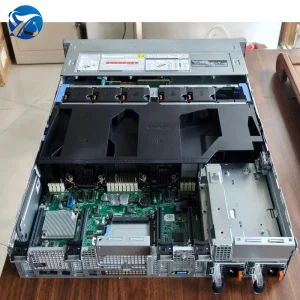
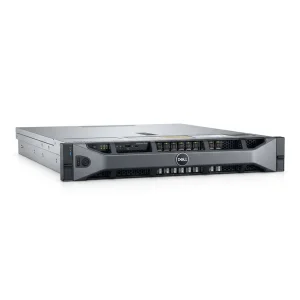

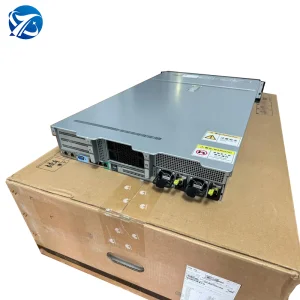
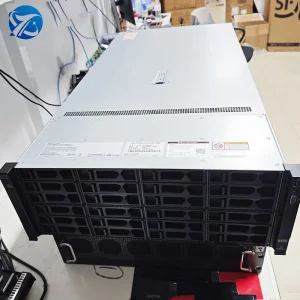
The global networking landscape is undergoing a massive paradigm shift. Driven by hyper-scale cloud deployments, high-performance computing (HPC), and artificial intelligence workload requirements, traditional networking topologies are no longer sufficient. To support latency-sensitive data ingestion and model training clusters, enterprises require dedicated, custom-tailored switching solutions. Standard commercial off-the-shelf (COTS) switches often fall short due to fixed firmware configurations, rigid thermal layouts, and sub-optimal hardware-level customizations.
"As data rates transition rapidly from 100G/200G to 400G and 800G, the optimization of network switches at the physical and ASIC firmware level is crucial. OEM/ODM switch custom design provides the exact hardware-software integration required for hyperscale environments."
Veltron Computing Technology Co., Ltd. bridges this gap by acting as a leading custom OEM switch manufacturer and factory. With 14 years of industrial expertise, we specialize in developing customized layer 2/layer 3 Ethernet switches, high-speed InfiniBand switches, and RoCE v2 (RDMA over Converged Ethernet) network adapters that serve as the foundation of modern high-performance cloud networks. Our custom switches are engineered to maximize throughput, minimize packet loss, and deliver predictable tail latency for dense compute clusters.
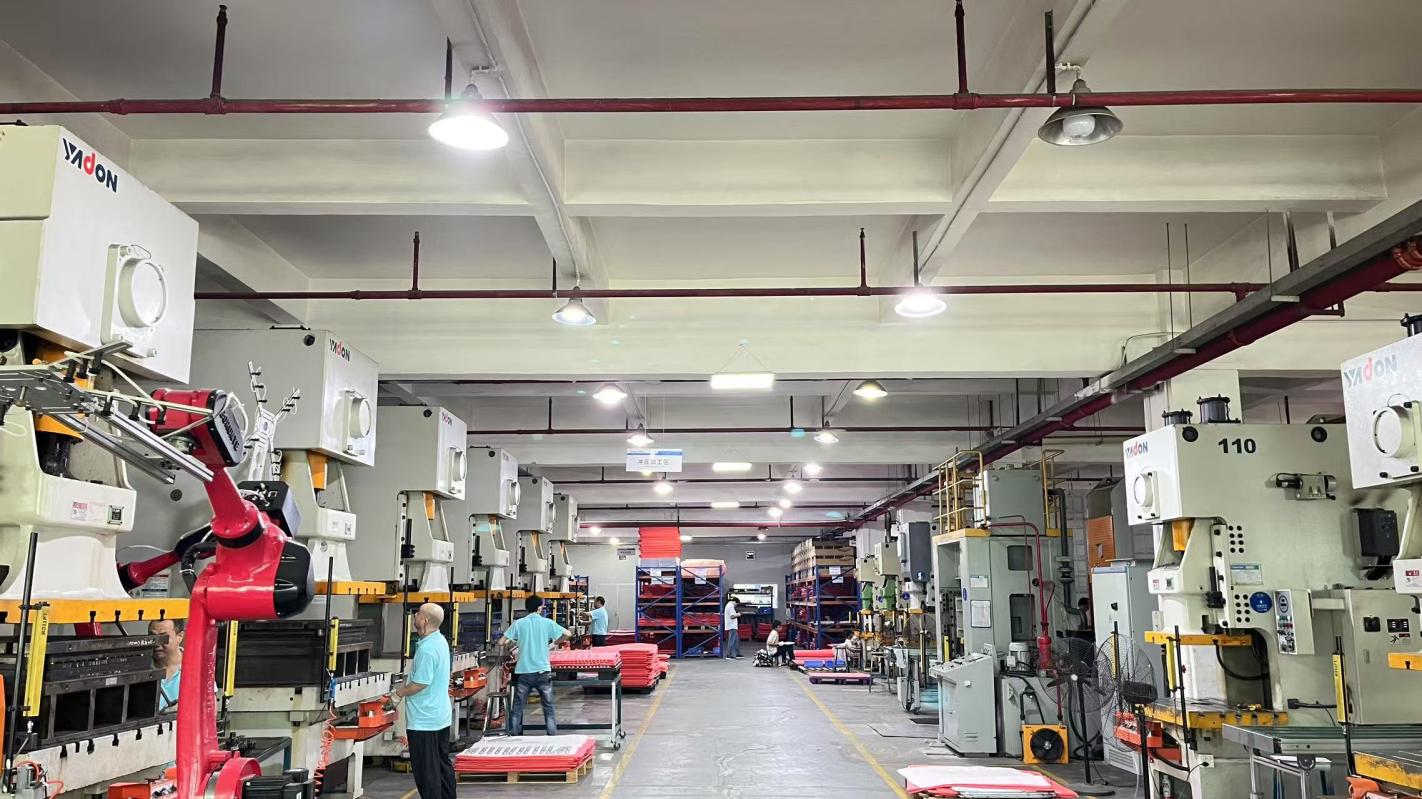
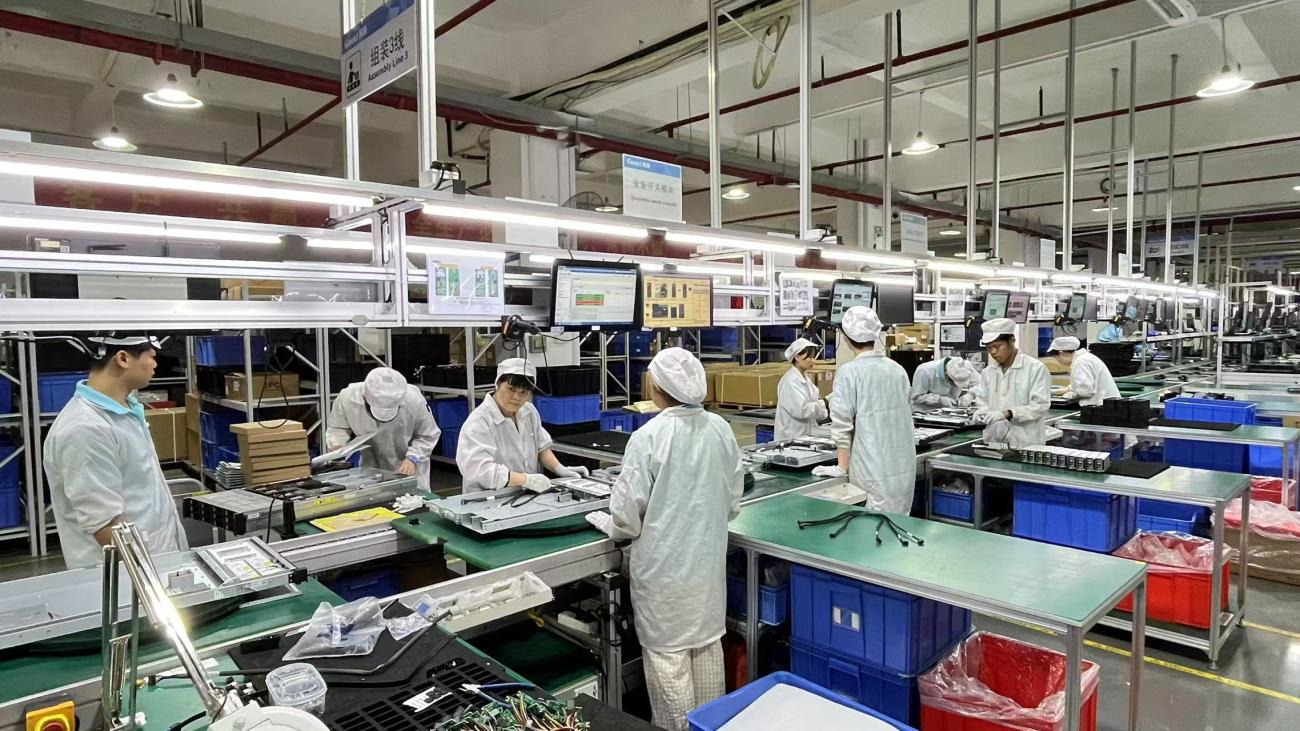
Established in 2016 in Shenzhen, China, Veltron Computing Technology Co., Ltd. has grown to operate a state-of-the-art manufacturing facility covering over 3,800 square meters. Our production plant is equipped with modern assembly lines, dedicated signal integrity laboratories, thermal simulation chambers, and automatic optical inspection (AOI) machines.
To guarantee absolute operational reliability, we employ 56 dedicated quality control personnel who enforce a multi-stage Quality Assurance (QA) protocol. Every switch chassis, ASIC chip, and transceiver port undergoes rigorous thermal stress, signal attenuation, and long-term burn-in testing before leaving the factory floor.
Supported by 8 years of export experience and strategic alliances with over 1,200 supply chain partners, we ensure that critical components like switching silicon, multi-layer PCBs, and power units are consistently available. This robust ecosystem enables us to handle high-volume demands while launching more than 85 new hardware and software upgrades annually.
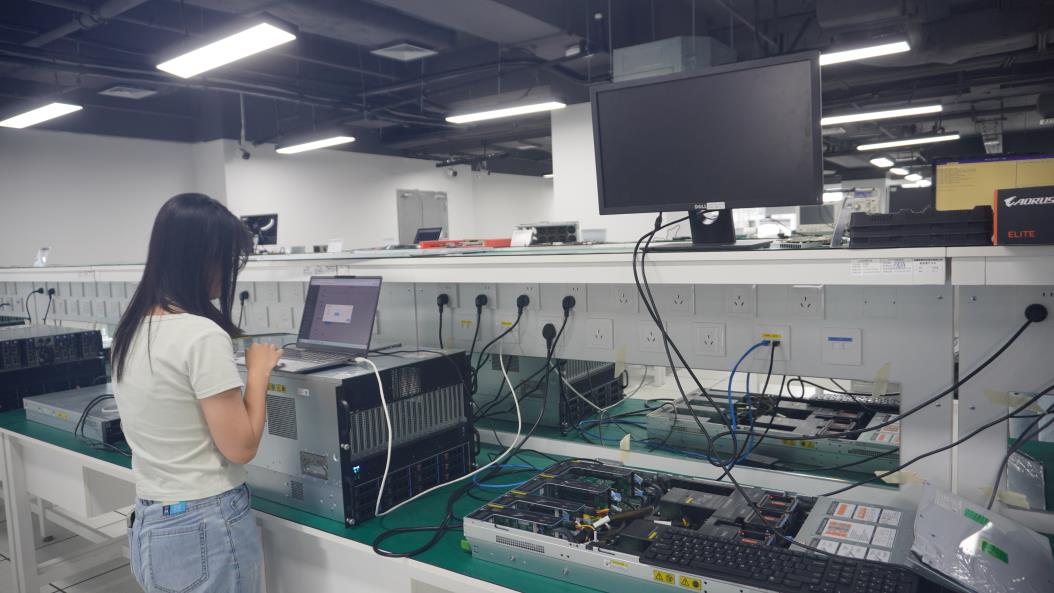
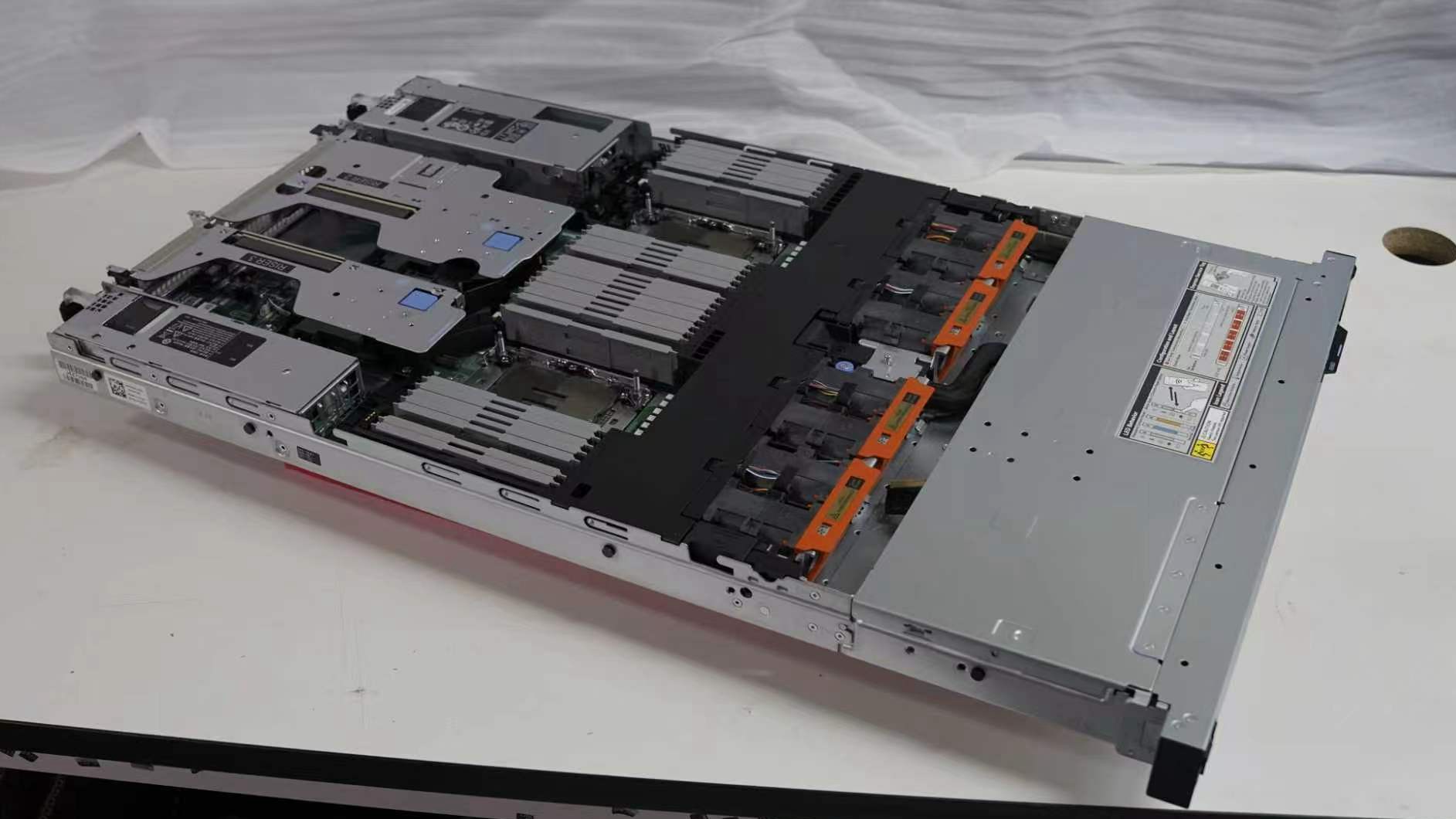
Take a look inside our ISO-certified Shenzhen manufacturing lines and high-performance server/network validation testing environments.


Procurement directors and network architects face distinct challenges when selecting switching hardware for multi-region operations. High-density edge nodes, diverse data center architectures, and distinct regulatory environments create complex criteria.
Veltron addresses these diverse needs through our flexible OEM/ODM system. We allow clients to choose the switching silicon (such as Broadcom Trident/Tomahawk series or Intel Tofino), select physical connector types (RJ45, SFP+, QSFP28, QSFP-DD, OSFP), optimize localized power solutions, and load custom firmware to match their internal network operating systems.
Modern networks must scale efficiently across different operating environments. Below is a structural technical analysis comparing custom switch configurations optimized by Veltron for major macroeconomic solutions.
| Application Scenario | Silicon Architecture | Interface Standard | Software Platform | Key Network Protocols |
|---|---|---|---|---|
| AI & Deep Learning | Broadcom Tomahawk 4 / 5 | 400G OSFP / 800G QSFP-DD | SONiC / Bare-Metal OS | RoCE v2, PFC, ECN, RDMA |
| Cloud Computing Datacenter | Broadcom Trident 3 / 4 | 25G SFP28 / 100G QSFP28 | ONIE, Open Network Linux | VXLAN, EVPN, BGP, LACP |
| Carrier Edge & 5G | Marvell Prestera / Teralynx | 10G SFP+ / 25G SFP28 | Custom Linux SDK | SyncE, IEEE 1588v2 PTP, MPLS |
| Smart Industry / PoE | Realtek / Microchip RTL | 1G RJ45 / PoE+ (IEEE 802.3at) | Proprietary Layer 2 Managed | IGMP Snooping, VLAN, MSTP |
For AI workloads, traditional TCP/IP networks introduce unacceptable latency and processing overhead. Veltron's custom AI-optimized switches support RDMA over Converged Ethernet (RoCE v2), enabling direct memory transfers between server nodes without involving the host CPUs. Our custom switches leverage Priority Flow Control (PFC) and Explicit Congestion Notification (ECN) to guarantee loss-free fabric transport, providing a robust architecture for large language model (LLM) training and inference.
The networking industry is on the verge of transitioning from electrical to optical interconnect developments. As port speeds approach 1.6T and individual silicon throughput surpasses 51.2 Tbps, current hardware models encounter severe physical limitations.
Traditional pluggable optical transceivers face challenges with signal loss at high frequencies. Veltron's R&D division is actively testing Co-Packaged Optics (CPO) prototypes. By mounting optical engines directly onto the substrate alongside the switching silicon, we can reduce overall power consumption by up to 30% and significantly improve thermal management.
We are investing in Silicon Photonics research to replace traditional copper-based transceivers. Integrating optical circuits directly onto silicon chips enables faster data transfers, reduced heat generation, and much lower latency, paving the way for sustainable 1.6T networking components.
Future network administration will increasingly rely on automated control planes. Veltron is working with open-source communities to integrate telemetry frameworks directly into custom SONiC configurations. By streaming real-time queue states, buffer utilization metrics, and physical lane conditions, our switches enable central orchestrators to proactively bypass network congestion before it impacts latency.
Enterprise-grade switches represent the heart of physical network infrastructure. A failure at the core or aggregation layer can lead to costly downtime. To manage this risk, Veltron implements a comprehensive testing process for all customized hardware designs.
Our Quality Control department employs 56 specialists who track the journey of every switch from components to final testing. Using high-frequency oscilloscopes and traffic generators, we verify signal integrity on 112G SerDes lanes to ensure packet transmission is stable under full load.
Everything you need to know about our custom OEM/ODM switch services, design protocols, and hardware architectures.