Veltron
1. Global Enterprise Procurement Trends in Digital Transformation Hardware
Digital transformation is no longer a corporate buzzword; it is an existential imperative driven by the scaling demands of Artificial Intelligence (AI), Machine Learning (ML), and high-frequency analytical databases. At the heart of this global transition lies enterprise hardware computing infrastructure. As multi-national corporations migration strategies transition from hyper-generalized cloud hosting to hybrid and edge paradigms, the focus of procurement executives has pivotally shifted back to high-spec hardware manufacturers and specialized fabrication facilities.
High Density GPU Configurations
Global demand is heavily dominated by multi-GPU nodes capable of managing Large Language Models (LLMs) and deep neural learning pipelines. Infrastructure procurement focuses heavily on optimal graphics processing unit arrays combined with low-latency communication setups like NVLink and PCIe Gen5 architectures.
Localized Latency & Edge Integration
Processing data directly at the generation boundary (IoT, remote factories, autonomous nodes) requires resilient, short-depth compute racks. Hardware design focuses on thermal endurance, resistance to particulate contamination, and scalable custom branding solutions.
Secure & Traceable Supply Chains
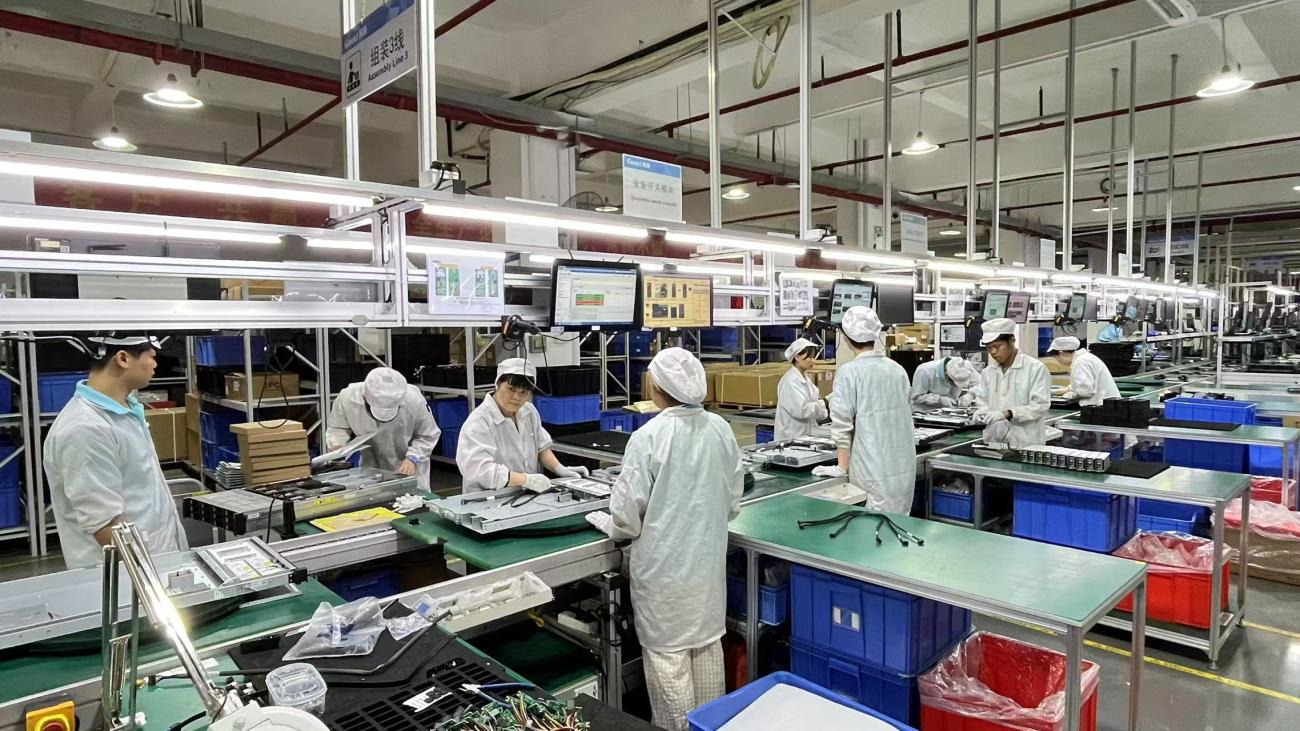
Modern organizations enforce strict geopolitical compliance. IT infrastructure buyers audit production lines down to individual capacitor sourcing to guarantee hardware root-of-trust, mitigate spyware intervention risks, and ensure regulatory alignment.
Macro Industry Solutions by Vertical
The deployment of high-performance architecture must align with specific operational needs. Digital transformation looks different depending on the business sector:
- Smart Manufacturing & Industrial IoT (IIoT): Requires ruggedized compute hardware with high tolerance for temperature fluctuations. AI edge units process machine vision models in real-time to detect defects on assembly lines, necessitating robust compute servers with multiple PCI-e expansion capabilities for capturing interfaces.
- FinTech & High-Frequency Analytics: Financial organizations utilize low-latency architectures with ultra-high speed network connectivity (such as 100GbE / 200GbE Mellanox NICs) to aggregate trading inputs, manage risk matrix algorithms, and detect transaction anomalies instantaneously.
- Biotech & Medical Informatics: AI storage servers with optimized GPU interconnects facilitate genomic sequencing and molecular docking analysis. These operations demand systems capable of sustaining high read/write cycles without throttling under extensive processing thermal conditions.