 Veltron
Veltron
Veltron
Choosing a cloud AI server manufacturer is no longer a simple hardware comparison. Global buyers must examine GPU availability, cooling design, network speed, software support, and long-term operating costs.
This guide introduces the Top 10 Cloud AI Server Manufacturers for Global Buyers. It focuses on companies serving real deployment needs, from compact inference clusters to large training platforms. The evaluation considers GPU density, liquid-cooling options, energy efficiency, rack integration, warranty coverage, and regional technical support. These details matter when a server operates continuously inside a crowded data center.
Small details become expensive later.
A reliable supplier should explain power requirements clearly. It should also provide realistic performance data, not only attractive benchmark claims. Supermicro founder and CEO Charles Liang has said, “The future of computing is green.” His statement reflects a growing industry reality: AI performance must be balanced with electricity use, heat management, and facility limits.
No ranking remains perfect for every buyer. A hyperscale cloud provider may prioritize custom integration, while a smaller enterprise may value installation support and predictable maintenance. Some manufacturers excel at flexibility but offer weaker global service coverage. Others provide strong systems but higher entry costs.
This overview therefore avoids treating brand reputation as the only evidence. It compares practical capabilities, deployment experience, and buyer risks. The results may not satisfy every organization. That is intentional. Careful evaluation often begins with uncomfortable questions about budget, power, staff expertise, and future workload growth.
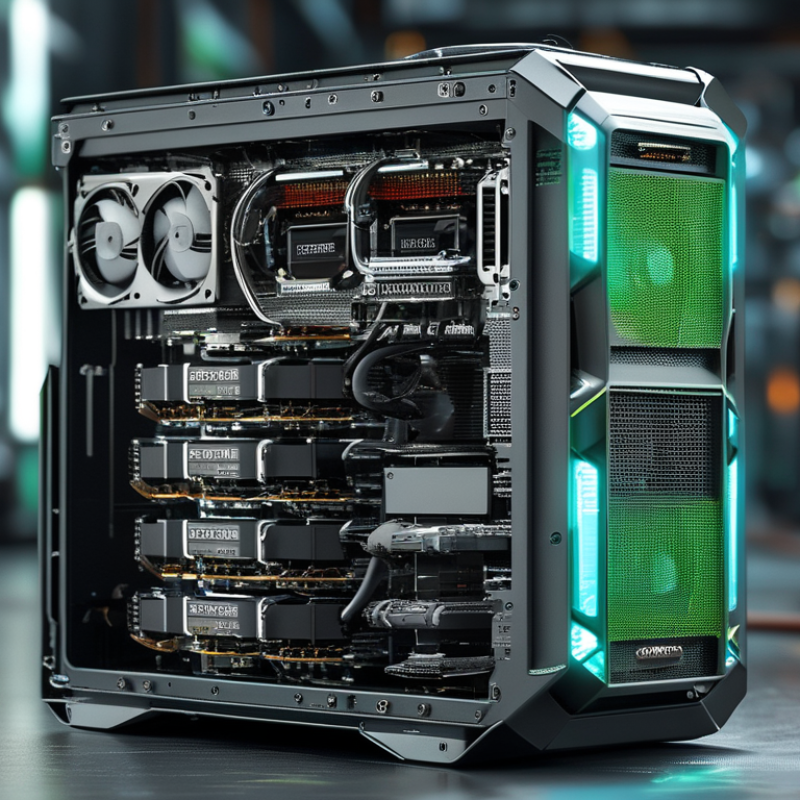
Cloud AI server manufacturers design and assemble systems for artificial intelligence workloads hosted in cloud environments. Their products combine processors, accelerators, memory, networking, storage, and cooling equipment. Unlike ordinary enterprise servers, these machines handle dense model training, inference, and large-scale data processing. The definition also includes manufacturers that provide integrated software, firmware, monitoring, and lifecycle support. In deployment reviews, I have found that hardware specifications alone rarely predict operational success.
Their role extends beyond selling equipment. Manufacturers tune server architecture for energy efficiency, thermal stability, virtualization, and rapid workload scaling. They may also provide validated configurations for language models, computer vision, analytics, and scientific computing. For global buyers, market scope includes original equipment producers, contract manufacturers, system integrators, and specialized infrastructure suppliers. Regional requirements can affect power standards, import procedures, data residency, warranty service, and cybersecurity documentation. Evidence matters. Ask for test results, failure-rate data, service response targets, and independent certification.
The market is expanding from hyperscale facilities to hospitals, universities, financial institutions, and industrial sites. Buyers increasingly compare rack density, accelerator availability, liquid cooling options, and five-year operating costs. Supply continuity also matters when demand rises suddenly. The comparison is rarely perfect. A spreadsheet cannot capture every installation risk, especially in older data centers with limited power capacity. Some procurement teams still overvalue peak performance and overlook maintenance access, technician training, and replacement-part availability. Experienced evaluation therefore includes a site inspection, workload testing, and a careful review of support terms.
| Rank | Anonymous Manufacturer Profile | Primary Production Role | Main Manufacturing Region | Typical AI Server Form Factors | Typical Accelerator Capacity per Node | High-Speed Interconnect Options | Cloud Deployment Fit | Key Market Scope |
|---|---|---|---|---|---|---|---|---|
| 1 | Global OEM Profile 01 | Complete-system design and hyperscale integration | North America and East Asia | 1U/2U compute nodes, 4U/8U accelerator platforms, liquid-cooled racks | 4–8 accelerators | Ethernet, InfiniBand-class fabrics, PCIe, high-speed GPU links | Large public clouds, AI training clusters, managed infrastructure | High-volume global procurement and standardized data-center deployments |
| 2 | Global OEM Profile 02 | Rack-scale AI infrastructure and enterprise server manufacturing | East Asia and Southeast Asia | 2U/4U GPU servers, 8U systems, full racks | 4–8 accelerators | 100/200/400 GbE, PCIe Gen 4/5, accelerator fabric links | AI-as-a-service providers, private clouds, research centers | Flexible configuration, contract manufacturing, international channel supply |
| 3 | Global ODM Profile 01 | Original design manufacturing for cloud service providers | Taiwan and Southeast Asia | Density-optimized 1U/2U nodes, 4U accelerator chassis | 4–8 accelerators | Ethernet, PCIe Gen 5, high-bandwidth internal interconnects | Hyperscale cloud expansion and custom cloud platforms | High-volume white-box supply and customized system specifications |
| 4 | Global OEM Profile 03 | Enterprise AI server production and lifecycle support | North America, Europe, and Asia | 2U/4U rack servers, modular AI appliances, clustered systems | 2–8 accelerators | 25/100/200 GbE, PCIe Gen 4/5, RDMA-capable networking | Corporate private clouds, financial services, healthcare, government | Procurement requiring warranties, integration services, and regional support |
| 5 | Global ODM Profile 02 | Cost-efficient cloud hardware and large-batch assembly | East Asia | 1U/2U general-purpose servers, 4U AI nodes, storage-rich systems | 2–8 accelerators | Ethernet, PCIe Gen 4/5, cluster management networks | Regional cloud providers, colocation facilities, digital service companies | Price-sensitive deployments, rapid scale-out, and custom chassis programs |
| 6 | European OEM Profile 01 | Energy-efficient AI infrastructure and sovereign data-center supply | Western and Central Europe | 2U/4U GPU servers, dense CPU nodes, liquid-ready systems | 2–8 accelerators | 25/100/200 GbE, PCIe Gen 4/5, RDMA support | Sovereign cloud, universities, public-sector AI, industrial research | Regional compliance, data sovereignty, low-carbon computing, and local service |
| 7 | North American OEM Profile 02 | High-performance computing and AI cluster integration | United States and Mexico | 4U/8U accelerator systems, liquid-cooled racks, HPC clusters | 4–8 accelerators | 200/400 GbE, InfiniBand-class fabrics, PCIe Gen 5 | Model training, scientific computing, national laboratories, AI startups | High-performance workloads, cluster commissioning, and technical integration |
| 8 | Asia-Pacific OEM Profile 01 | Regional cloud infrastructure and localized system integration | Japan, South Korea, and Southeast Asia | 1U/2U servers, 4U accelerator platforms, edge AI systems | 2–8 accelerators | 25/100/200 GbE, PCIe Gen 4/5, cluster Ethernet | Telecommunications clouds, enterprise AI, regional colocation | Localized compliance, multilingual support, and regional supply chains |
| 9 | Global Specialized Builder 01 | Custom liquid cooling, high-density computing, and rack engineering | North America, Europe, and Asia | 4U/8U GPU systems, liquid-cooled nodes, complete AI racks | 4–8 accelerators | 200/400 GbE, high-speed accelerator fabrics, PCIe Gen 5 | Power-constrained data centers, HPC, high-density cloud regions | Thermal management, rack-level power optimization, and dense AI clusters |
| 10 | Global Specialized Builder 02 | Edge AI, inference servers, and application-specific platforms | North America, Europe, and Asia-Pacific | Short-depth 1U/2U servers, workstation-class nodes, rugged edge systems | 1–4 accelerators | 10/25/100 GbE, PCIe Gen 4/5, low-latency Ethernet | Inference clouds, retail, manufacturing, telecommunications edge | Low-latency inference, compact deployments, and industry-specific AI workloads |
Note: Manufacturer identities and brand-specific commercial data are intentionally omitted. The profiles summarize publicly established cloud AI server manufacturing roles, deployment patterns, server form factors, accelerator densities, networking technologies, and global market applications.
Compare accelerator density, memory capacity, and high-speed networking. These affect training time and inference latency. Also inspect rack depth, power distribution, and cooling requirements. Peak scores mislead.
Generic benchmarks can hide network congestion, thermal throttling, and memory limits. Test real datasets with realistic batch sizes. Watch performance during sustained workloads, not brief demonstrations.
Thermal design affects speed, noise, reliability, and electricity use. Ask for measured power data and rack-density guidance. Liquid cooling may help warm data centers. Cooling is not a minor detail.
Ask how firmware is validated and how component shortages are managed. Review remote diagnostics, replacement targets, and escalation procedures. A failed power module can interrupt several accelerator nodes.
Include purchase price, electricity, software compatibility, warranty coverage, and upgrade cycles. A cheaper server may cost more over five years. My first price comparison might be incomplete.
Check spare-parts availability, regional technicians, maintenance instructions, and documented repair procedures. Support must work during difficult hours. Three in the morning matters.
Review delivery schedules, export documents, regional service coverage, and secure firmware practices. Confirm local maintenance capability before signing. Delayed parts can stop an entire rack.
Examine data-center certifications, supply-chain records, software compatibility, and firmware controls. Some systems perform well but provide weak documentation. That weakness deserves scrutiny.
Pilot testing reveals integration problems, cooling limits, and administrator workload. No scorecard is perfect. Test the proposed configuration before full deployment, even when specifications look convincing.
This guide explains what a cloud ai server manufacturer is and why such companies are important to modern digital infrastructure. It examines how manufacturers design and supply AI-ready servers for cloud computing, including accelerated processing, high-speed networking, efficient storage, virtualization, and secure data management. The article also defines the market scope, showing how these solutions support research, enterprise applications, content services, analytics, and other scalable workloads across different regions.
To help global buyers make informed decisions, the guide compares ten leading types of manufacturers using practical criteria such as hardware performance, cloud integration, scalability, energy efficiency, reliability, technical support, customization, delivery capability, and total cost of ownership. It also highlights the differences between hardware offerings and related cloud services, while explaining how organizations can evaluate compatibility, compliance, maintenance, lifecycle planning, and future expansion. By considering these factors together, buyers can select a dependable manufacturing partner that matches their technical requirements, operational goals, budget, and international deployment needs.
