Choosing the 2026 best deep learning server manufacturers requires more than comparing processor names or promotional benchmarks. Real performance depends on GPUs, memory bandwidth, cooling design, storage speed, networking, software support, and service quality. A server that excels in a laboratory may struggle inside a crowded data center.
This guide evaluates each deep learning server manufacturer through practical deployment factors. We consider GPU density, NVLink or high-speed interconnect options, liquid and air cooling, power efficiency, rack compatibility, and expansion flexibility. We also examine support response times, warranty coverage, firmware updates, and integration with major AI frameworks. These details matter when a training job runs continuously for several days.
Reliable evidence is essential. Vendor specifications provide a starting point, but independent testing and customer experience reveal more. Some systems deliver impressive peak results yet require expensive infrastructure upgrades. Others appear less powerful but offer steadier operation and simpler maintenance. That difference is easy to underestimate.
The shortlist should therefore reflect real workloads, not just headline performance. Large language model training, computer vision, scientific simulation, and inference each require different server designs. Budget, electricity costs, staff expertise, and regional availability also influence the final decision. No manufacturer is perfect. Even respected brands may have limited component availability or uneven after-sales support in certain markets.
This introduction sets a practical framework for comparing leading manufacturers in 2026. It favors transparent specifications, measurable results, and long-term ownership value over exaggerated claims. The best choice is the system that performs reliably, scales sensibly, and remains supportable after installation.
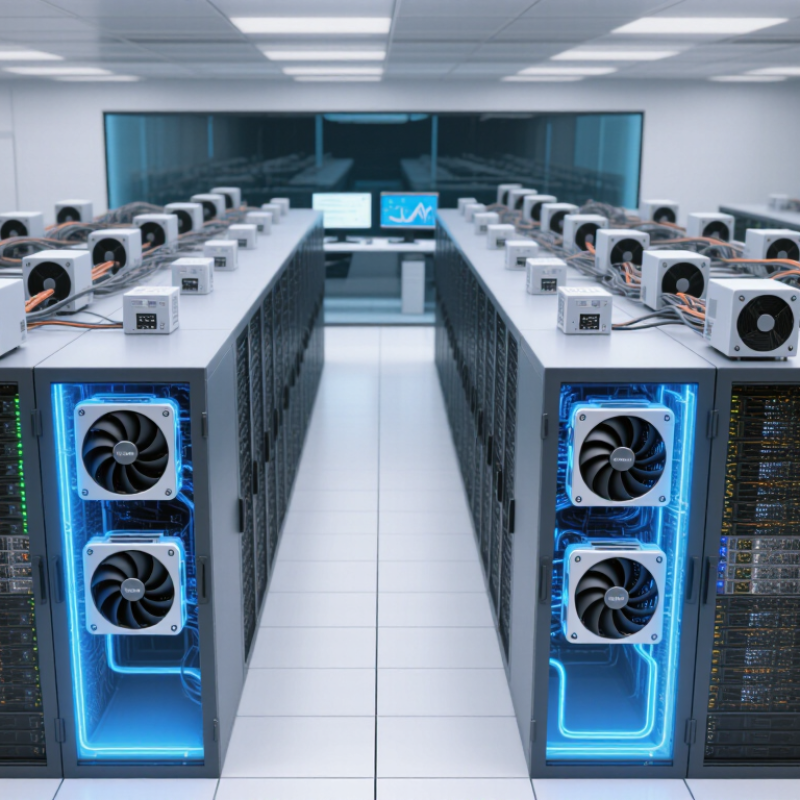
Deep Learning Server Manufacturers: Definition and Market Role in 2026
Deep learning server manufacturers design and build computing systems for model training, inference, and data processing.
Their work includes processor integration, high-speed networking, memory design, rack assembly, cooling, firmware, and system validation. In 2026, manufacturers are no longer simple hardware suppliers. They act as infrastructure partners for research centers, enterprises, and public institutions.
The market is expanding quickly. IDC forecasts worldwide artificial intelligence and generative AI spending will reach 632 billion US dollars by 2028, with infrastructure as a major component. Stanford University’s AI Index 2025 also reports that training compute continues to grow rapidly, with notable increases in model scale and energy demand. These figures explain why manufacturers now compete through density, thermal efficiency, serviceability, and deployment speed. A powerful server can still fail commercially if maintenance is slow or power costs become unreasonable.
Tips:
Compare total ownership cost, not only accelerator count. Check rack power, cooling capacity, memory expansion, warranty terms, and local technical support. Request benchmark evidence using workloads similar to yours. Marketing results can look cleaner than real operations.
From practical deployment reviews, reliability often matters more than peak specifications. A system that overheats, throttles, or needs frequent manual tuning wastes expensive computing time. This is where manufacturer expertise becomes visible. Yet specifications are not everything. Buyers should question whether current designs can support changing model architectures and stricter energy targets. The market may reward flexibility more than raw speed.
Core Hardware and System Features of Modern AI Servers
Modern deep learning servers are no longer defined by accelerator count alone. Their value depends on balanced system design. The Stanford AI Index 2025 reports that training compute for notable models has doubled approximately every five months. This trend demands high-bandwidth memory, fast interconnects, and efficient data pipelines. A practical server should support multiple accelerators, PCIe or CXL expansion, and 400 or 800 Gb/s networking. Otherwise, expensive processors may sit idle while data arrives.
Cooling and power design deserve equal attention. The International Energy Agency estimates that data centers consumed about 460 TWh of electricity globally in 2022, with demand potentially reaching over 1,000 TWh by 2026. Direct liquid cooling can control heat around dense accelerator trays more effectively than air alone.
Redundant power supplies, hot-swappable fans, and clear thermal telemetry also reduce operational risk. Small details matter. A blocked airflow path can lower performance within minutes.
Reliable manufacturers should provide validated firmware, secure boot, remote management, and measurable service procedures. The Uptime Institute’s data center research repeatedly identifies human error and operational complexity as major outage contributors. Therefore, simple maintenance workflows are not optional. In real deployments, software compatibility can matter more than peak benchmark scores. This point is often underestimated. Some systems also advertise impressive density while overlooking noise, cable access, or future upgrade costs. Buyers should test sustained workloads, not only short demonstrations, and review power behavior under realistic utilization.
Key Criteria for Comparing Deep Learning Server Manufacturers
Comparing deep learning server manufacturers requires more than counting GPUs. Start with measured performance, supported workloads, and complete system design. MLCommons’ MLPerf Training results show that scaling efficiency varies sharply across hardware configurations. A faster accelerator may lose value if communication overhead rises between nodes. Request results for your actual model, batch size, precision, and network topology. Generic peak FLOPS can mislead.
Thermal engineering deserves equal attention. The Uptime Institute’s data-center surveys repeatedly identify power, cooling, and availability as major operational concerns. Inspect rack density, liquid-cooling options, fan redundancy, power-delivery limits, and service access. A practical test should run continuously, not briefly. Check GPU temperature logs, throttling events, and recovery after a failed power supply. Small details matter.
Reliability is measurable.
The Stanford AI Index 2025 reports that training compute for notable AI models continues to grow rapidly, increasing pressure on energy and infrastructure budgets. Compare performance per watt, not only performance per server. Review warranty terms, replacement timelines, firmware governance, and spare-part availability. Ask whether technicians can diagnose faults remotely. In my experience, documentation is often weaker than the hardware. That weakness costs hours. I would also challenge vendor benchmarks, because cooling conditions and software tuning may differ from your facility. A controlled acceptance test, using representative data and repeatable scripts, provides stronger evidence than a polished demonstration.
Leading Manufacturer Categories and Their Product Strengths
In 2026, deep learning server manufacturers fall into several practical categories. General-purpose OEM and ODM makers offer standardized GPU servers, predictable supply, and broad configuration options. Their strongest advantage is repeatable production. They suit research labs that need identical nodes across multiple racks. However, standard designs may leave limited room for unusual accelerator layouts or custom networking.
GPU-focused manufacturers build systems around dense accelerator modules, high-speed interconnects, and large memory pools. Their products often include optimized airflow, redundant power supplies, and direct liquid cooling. These details matter during long training runs. A rack can become extremely hot within minutes. Rack-scale integrators add cluster planning, fabric design, storage tuning, and deployment support. Their value appears when a server must work as part of a complete computing environment. Still, integration quality varies, so buyers should request thermal test records and workload-based benchmarks.
Edge and industrial server manufacturers emphasize compact frames, shock resistance, remote management, and extended operating temperatures. These systems fit factories, laboratories, and remote facilities with limited space. Custom manufacturers can adjust chassis depth, cooling loops, firmware settings, and accelerator combinations. Flexibility is useful, but it can increase validation time and maintenance complexity. A promising specification sheet is not enough. Confirm burn-in procedures, spare-part availability, firmware update policies, and warranty response times. One overlooked cable or airflow gap can reduce performance. That lesson is easy to forget.
How to Select a Deep Learning Server Manufacturer for Specific AI Workloads
Choosing a deep learning server manufacturer starts with workload, not a glossy specification sheet. A vision team processing 4K medical images needs different hardware from a language-model team fine-tuning billions of parameters. I would document model size, batch size, training frequency, latency targets, and expected growth. GPU memory matters, but CPU balance, storage speed, and network bandwidth matter too. A powerful server can still idle during data loading. That is an expensive surprise.
Ask manufacturers for workload-specific benchmarks, not only theoretical accelerator numbers. Request results using your framework, dataset scale, precision mode, and device count. Check whether the system supports direct GPU communication and fast local storage. For inference, measure response time under realistic concurrent requests. For training, inspect scaling efficiency across two, four, and eight accelerators. Small details matter: replaceable fans, clear cable paths, remote diagnostics, and power protection. Speak with engineers who can explain failures, not only sales staff.
Reliability also depends on support after installation. Confirm firmware processes, spare-part availability, security updates, warranty response times, and on-site service coverage. Review cooling requirements carefully; a dense rack may need stronger airflow and higher electrical capacity. I would test a pilot server for several weeks before a large purchase. It may reveal noisy fans, unstable drivers, or poor software compatibility. No selection is perfect. Budget pressure can make cheaper hardware attractive, yet downtime may cost more than the original saving. Choose a manufacturer that documents limits honestly and adapts the platform to your actual workload.
2026 Best Deep Learning Server Manufacturers? How to Select a Deep Learning Server Manufacturer for Specific AI Workloads
Model-weight memory is a practical starting point when selecting a deep learning server. Larger models and higher numerical precision require more accelerator memory, while training also needs additional space for gradients, optimizer states, activations, and checkpoints.
The chart uses representative neural-network sizes of 25.6 million, 110 million, and 7 billion parameters. Memory estimates are calculated as parameter count multiplied by bytes per parameter: 4 bytes for FP32, 2 bytes for FP16, and 1 byte for INT8. Actual server requirements will be higher because of runtime overhead and training states.
FAQS
Balanced design matters more than accelerator count. It needs high-bandwidth memory, fast interconnects, and efficient data pipelines. PCIe or CXL expansion adds flexibility. Fast networking prevents expensive processors from sitting idle.
Cooling is critical during long training runs. Direct liquid cooling can control heat around dense accelerator trays. Blocked airflow may reduce performance within minutes. Small gaps matter.
Look for redundant power supplies and hot-swappable fans. Clear thermal telemetry helps teams detect rising temperatures early. Check electrical capacity before filling a rack. Power behavior deserves testing.
General-purpose server makers offer repeatable production and broad configurations. They suit laboratories needing identical nodes across multiple racks. However, standard designs may limit unusual accelerator layouts. That trade-off is easy to miss.
Rack-scale integrators help connect servers, networks, storage, and deployment services. Their value appears when one server must operate within a larger cluster. Ask for thermal records and workload-based benchmarks. Integration quality can vary.
Edge systems should support compact frames, shock resistance, and remote management. Extended operating temperatures can help in factories or remote facilities. Confirm cable access and service procedures. Space is often tight.
Start with model size, batch size, training frequency, and latency targets. A vision workload may need different hardware from large-scale language fine-tuning. Measure CPU balance, storage speed, and network bandwidth. GPU memory alone is insufficient.
Request tests using your framework, dataset scale, precision mode, and accelerator count. Training tests should compare two, four, and eight accelerators. Inference tests should measure realistic concurrent requests. Short demonstrations can mislead.
Confirm firmware updates, security patches, spare parts, and warranty response times. Ask whether remote diagnostics and on-site service are available. A pilot server may reveal unstable drivers or noisy fans. I would still retest later.
Compare sustained performance, power use, cooling needs, and expected downtime. Cheaper hardware may create higher operational costs later. Review upgrade expenses and maintenance complexity. No choice is perfect.
Conclusion
In 2026, a deep learning server manufacturer plays an important role in providing the computing infrastructure needed for advanced artificial intelligence, scientific research, data analysis, and enterprise automation. Modern AI servers are designed with high-performance processors, accelerator support, large memory capacity, fast storage, efficient networking, and advanced cooling systems. Their reliability, scalability, energy efficiency, and compatibility with popular software environments directly influence training speed, model deployment, and long-term operating costs.
When comparing manufacturers, users should evaluate system performance, hardware flexibility, technical support, delivery capability, security features, and total cost of ownership. Different manufacturer categories may focus on customized solutions, standardized platforms, high-density systems, or specialized configurations. The best choice depends on the intended workload, such as large-scale model training, inference services, computer vision, natural language processing, or research experimentation. A careful assessment of current requirements and future expansion plans can help organizations select a dependable deep learning server manufacturer that delivers balanced performance, manageability, and sustainable value.
 Veltron
